
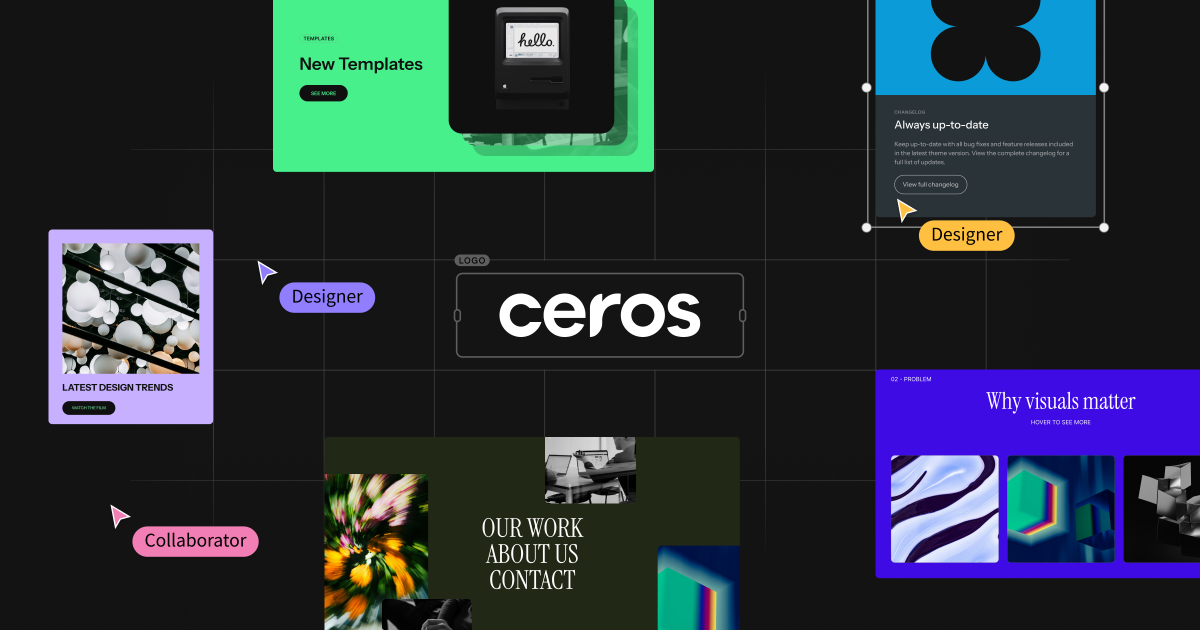
Ceros has been making no-code interactive content tools for over a decade. Flex is the platform's ground-up rebuild for the post-AI moment, replacing the older Studio with an HTML5-based architecture that produces faster-loading, WCAG 2.2 compliant output by default. The name comes from Flexbox — the layout engine underneath.
The use case is specific: editorial microsites, interactive campaign pages, animated brand experiences. Think less "product UI" and more "the interactive annual report" or "the branded landing page that has scroll animations and embedded video and needs to work on mobile." Ceros has always owned this niche, and Flex is them defending it.
The AI assistance in Flex is targeted rather than generative. It handles resizing layouts across breakpoints, running accessibility checks, and making repetitive text or color updates at scale. That's a more honest use of AI than generating entire experiences from prompts — the hard part of this kind of work is craft and storytelling, and Flex doesn't pretend otherwise.
Who it's for: marketing teams and creative agencies building high-production interactive content. The pricing is enterprise with no public numbers, which puts it out of reach for independents and small studios. If you're comparing it to Webflow or Framer for this use case, Ceros Flex is more opinionated about interactivity and less about general website building.
It's an established platform getting a necessary modernization, not a newcomer. For the teams it's built for, that heritage is a feature.




Ceros has been making no-code interactive content tools for over a decade. Flex is the platform's ground-up rebuild for the post-AI moment, replacing the older Studio with an HTML5-based architecture that produces faster-loading, WCAG 2.2 compliant output by default. The name comes from Flexbox — the layout engine underneath.
The use case is specific: editorial microsites, interactive campaign pages, animated brand experiences. Think less "product UI" and more "the interactive annual report" or "the branded landing page that has scroll animations and embedded video and needs to work on mobile." Ceros has always owned this niche, and Flex is them defending it.
The AI assistance in Flex is targeted rather than generative. It handles resizing layouts across breakpoints, running accessibility checks, and making repetitive text or color updates at scale. That's a more honest use of AI than generating entire experiences from prompts — the hard part of this kind of work is craft and storytelling, and Flex doesn't pretend otherwise.
Who it's for: marketing teams and creative agencies building high-production interactive content. The pricing is enterprise with no public numbers, which puts it out of reach for independents and small studios. If you're comparing it to Webflow or Framer for this use case, Ceros Flex is more opinionated about interactivity and less about general website building.
It's an established platform getting a necessary modernization, not a newcomer. For the teams it's built for, that heritage is a feature.